North America · United States
New York
New York is a city of distinct neighbourhoods connected by a 24-hour subway — and the borough you base in shapes your trip as much as the landmark list. Use this hub to decide when to go, how to navigate the grid, and which area to book before building a short itinerary.
Why Visit New York?
New York earns repeat visits because it layers so many experiences into a walkable, transit-connected grid. Within a single afternoon you can move from a world-class museum collection to a hole-in-the-wall dumpling spot to a rooftop bar overlooking the skyline — all without renting a car.
The cultural density is hard to overstate. The Met, MoMA, the Guggenheim, and dozens of smaller galleries sit alongside Broadway theatres, independent bookshops, and live-music venues spanning jazz clubs to arena tours. The food scene is equally deep: every regional cuisine on earth has at least one serious representative here, from West African suya in the Bronx to hand-pulled noodles in Flushing to tasting menus in Lower Manhattan.
Practically, New York works well for short trips. Direct flights connect it to most major cities worldwide, the subway runs around the clock, and the sheer concentration of things to do means you never need a packed schedule — just a neighbourhood and a direction to walk.
Best Time to Visit
Spring (April–June) and autumn (September–November) offer the most comfortable conditions. Temperatures hover between 10–22 °C (50–72 °F), Central Park is at its most photogenic, and outdoor dining is pleasant without being oppressive.
Summer (July–August) brings heat and humidity — expect daytime highs around 30 °C (86 °F) and occasional thunderstorms. Hotels tend to be pricier due to peak tourism, though cultural programming (free outdoor concerts, Shakespeare in the Park) is at its fullest.
Winter (December–February) is cold, with temperatures often below freezing and occasional snow. The upside: holiday markets, festive window displays, quieter museums on weekdays, and hotel rates that dip noticeably in January and February once the holiday rush ends.
Top Areas at a Glance
Midtown Manhattan
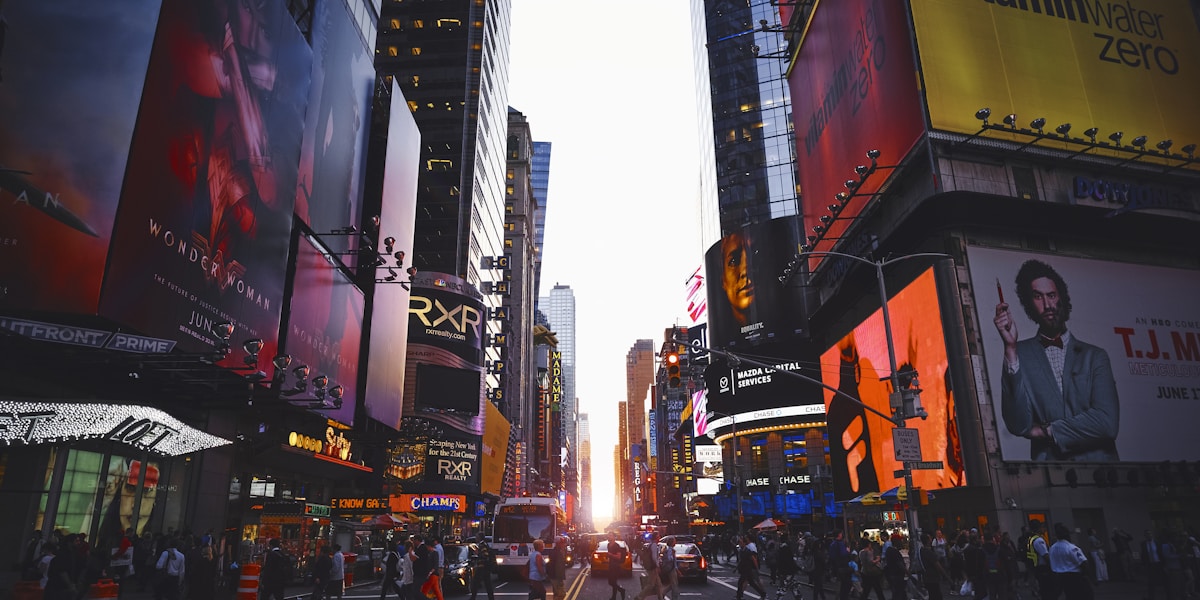
The classic first-timer zone: Times Square, Rockefeller Center, the Empire State Building, and Broadway theatres all sit within a 15-minute walk of each other. Hotels are plentiful but often represent the highest prices per square metre in the city. Best for short stays focused on landmarks and shows.
Lower Manhattan & the Financial District
Home to the 9/11 Memorial, the Staten Island Ferry (free views of the Statue of Liberty), and a growing food scene around Stone Street and the Seaport District. Hotels here tend to offer better weekend rates since the area’s weekday crowd is largely corporate.
Upper West Side & Upper East Side
Museum row runs along the eastern edge of Central Park (the Met, Guggenheim, Neue Galerie), while the Upper West Side flanks the park’s western border with the American Museum of Natural History and Lincoln Center. Both neighbourhoods feel residential and calmer — a good base for families or anyone who wants park access on their doorstep.
Brooklyn — Williamsburg & DUMBO
Williamsburg delivers independent coffee roasters, vintage shops, and a lively bar scene along Bedford Avenue. DUMBO (Down Under the Manhattan Bridge Overpass) offers waterfront parks with iconic Manhattan views and a cluster of galleries and design studios. Both areas connect to Manhattan in under 15 minutes by subway.
SoHo & Greenwich Village
SoHo’s cast-iron architecture houses high-end retail and brunch spots, while Greenwich Village offers tree-lined streets, jazz clubs, and some of the city’s best Italian-American food. Together they form a walkable stretch that rewards aimless wandering — and they sit on multiple subway lines for easy onward travel.
Sample Itinerary Shape
A four-day trip provides enough time to cover the highlights without rushing. Here’s a structural overview — for the full day-by-day breakdown, see the 4-Day New York Itinerary.
| Day | Focus | Key Areas |
|---|---|---|
| 1 | Landmarks & orientation | Midtown, Central Park south end |
| 2 | Culture & museums | Upper East Side, Upper West Side |
| 3 | Neighbourhoods & food | SoHo, Greenwich Village, Lower East Side |
| 4 | Brooklyn & waterfront | DUMBO, Williamsburg, Brooklyn Bridge walk |
Getting Around
The subway is the backbone of any New York trip. Operated by the MTA (mta.info), it runs 24 hours a day, seven days a week, covering all five boroughs with over 470 stations.
Payment options:
- OMNY — tap a contactless credit/debit card or phone at the turnstile. Fares are capped at the equivalent of a weekly unlimited pass once you hit a certain number of rides in a rolling seven-day window. No card to buy or refund.
- MetroCard — the legacy option, still accepted. An unlimited 7-day MetroCard is worth it if you plan more than a dozen rides in a week.
A single subway or bus ride costs the same flat fare regardless of distance. Transfers between subway and bus (or bus to bus) within two hours are free with OMNY or an unlimited MetroCard.
Other useful options:
- NYC Ferry — a scenic alternative for waterfront routes (Brooklyn, Astoria, the Rockaways). Same fare as the subway.
- Walking — Manhattan’s grid makes navigation intuitive. Avenues run north–south, streets run east–west, and block distances are short enough that many “subway trips” are actually a pleasant 15-minute walk.
- Taxis & rideshares — widely available but significantly more expensive than transit, especially during peak hours. Most useful late at night or for outer-borough trips where subway coverage thins out.
Where to Stay
Choosing the right neighbourhood matters more than choosing the right hotel brand in New York. Midtown puts you near theatres and landmarks but costs more; Brooklyn and Lower Manhattan often deliver better value and a more local feel.
For a detailed breakdown of areas, price tiers, and specific recommendations, see the full guide:
👉 Where to Stay in New York — Neighbourhood Guide
FAQ
Is New York safe for tourists?
New York is broadly safe for visitors, particularly in the neighbourhoods most tourists frequent. Standard city-travel advice applies: stay aware of your surroundings, keep valuables secure on the subway, and avoid poorly lit, empty streets late at night. Violent crime rates have dropped significantly over the past three decades, though petty theft (phone snatching, pickpocketing in crowded areas) remains worth guarding against.
How much should I budget per day?
Costs vary enormously depending on style. A mid-range day — hotel in a decent neighbourhood, a mix of casual and sit-down meals, subway travel, and one paid attraction — runs roughly $250–$400 per person. Budget travellers staying in hostels or outer-borough hotels and eating street food can manage on less; fine-dining and luxury-hotel visitors will spend considerably more.
Do I need to tip?
Yes. Tipping is customary and expected in restaurants (18–20 % of the pre-tax bill), bars ($1–2 per drink or 18–20 % of a tab), taxis (15–20 %), and hotels (a few dollars for bellhops and housekeeping). Counter-service spots with tip prompts on the screen are more discretionary — tipping there is appreciated but not obligatory.
How far in advance should I book Broadway tickets?
Popular shows can sell out weeks ahead, especially for weekend performances. Booking two to four weeks in advance usually secures good seats at face value. For same-day discount tickets, the TKTS booths in Times Square and Lincoln Center sell day-of seats at 20–50 % off — expect a queue, particularly for matinées.
Next Steps
- Where to Stay in New York — neighbourhood-by-neighbourhood breakdown with price context and transit access notes.
- 4-Day New York Itinerary — a structured day-by-day plan balancing landmarks, food, and neighbourhood exploration.
Travel Craft
The method behind this
These decisions are the same wherever you go — the Travel Craft guides cover them in full.
Travel guides