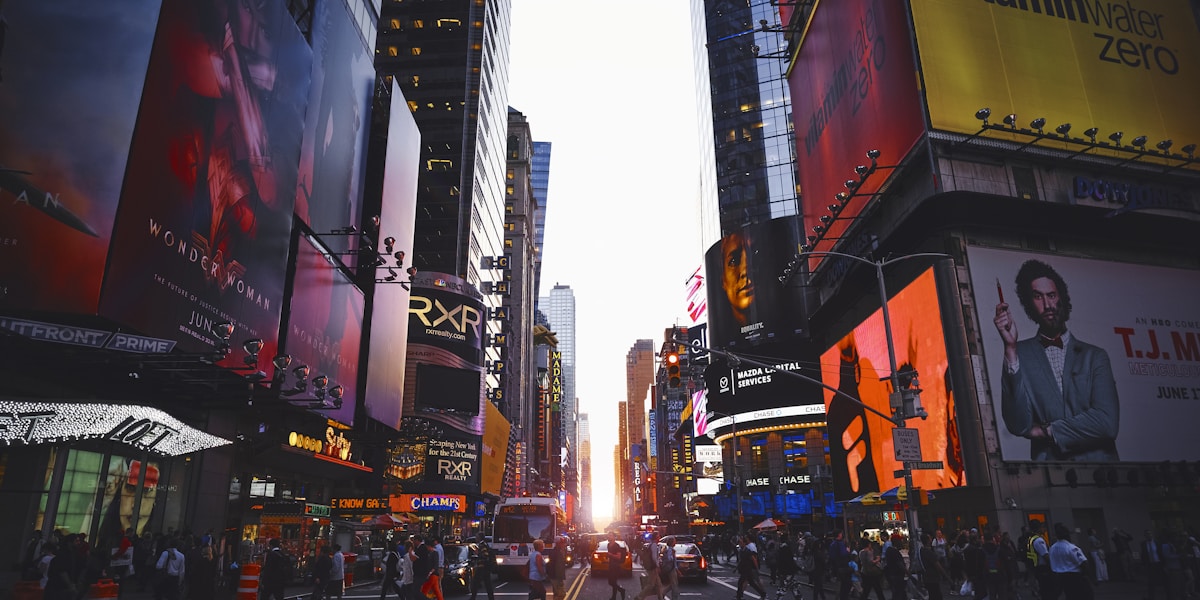
Where to Stay in New York: Best Neighborhoods for First-Timers
New York's subway runs 24/7, but the neighbourhood you sleep in still defines your restaurant options, morning walk, and commute to the sights. This guide compares the best first-timer bases so you book the right area before the right hotel.
Quick Answer
Best for most first-timers: Midtown Manhattan (west side / Hell’s Kitchen edge) — walkable to Central Park, Times Square, and Broadway, with express subway lines reaching downtown in under 15 minutes.
Best for food and atmosphere: SoHo, Greenwich Village, or the West Village — quieter streets, independent restaurants, and a more “local” feel while still being centrally located.
Best value with character: Williamsburg, Brooklyn — significantly lower hotel rates, excellent dining, and a short L-train ride to Manhattan.
How NYC Areas Work
Manhattan is a narrow island running roughly north-south. Streets form a numbered grid above Houston Street — avenues run north-south, streets run east-west. The grid makes navigation intuitive: higher street numbers mean further north, and avenues increase heading west. Below Houston Street (SoHo, the Village, FiDi), the grid dissolves into older, angled streets that follow colonial-era paths.
The subway system connects everything. Most tourist-relevant lines run north-south through Manhattan, with crosstown connections at key hubs (Times Square–42nd St, Union Square–14th St, Fulton Street). A single ride costs the same regardless of distance, and trains run around the clock — though late-night frequency drops to every 10–20 minutes on some lines.
Brooklyn sits east across the East River, connected by multiple subway lines and the iconic Brooklyn Bridge (walkable in 25 minutes). Queens lies further east and north. For a first visit, the decision usually comes down to: where in Manhattan, or Manhattan vs. Brooklyn.
The city is remarkably walkable. Most Manhattan neighbourhoods are best explored on foot, and many visitors cover 10–15 km daily without realising it. Pack shoes accordingly — this isn’t a cab city for short distances.
Midtown Manhattan
Price range: $$$ – $$$$
Best for: Short trips (3–4 nights), sight-focused itineraries, Broadway access
Key subway lines: 1/2/3, A/C/E, B/D/F/M, N/Q/R/W, 7
Midtown stretches from roughly 34th Street to 59th Street and contains the highest density of “postcard” New York: the Empire State Building, Rockefeller Center, St. Patrick’s Cathedral, MoMA, Times Square, and the southern edge of Central Park. Grand Central Terminal and Penn Station sit here, making arrivals and day trips seamless.
The trade-off is real: Midtown is loud, crowded, and expensive. Hotel rates run significantly higher than downtown or Brooklyn equivalents for comparable room quality. Restaurants near Times Square skew toward tourist-trap pricing, and sidewalks during rush hour test patience. The area empties out after Broadway shows end, leaving blocks that feel oddly desolate by midnight.
The move: Stay on the west side between 8th and 10th Avenues in the low-to-mid 40s or 50s. This puts you in Hell’s Kitchen — still walking distance to Broadway and the subway, but with genuinely good restaurants (Thai, Mexican, Italian, and everything between), quieter streets after dark, and noticeably better hotel value. Avoid booking directly on Times Square or 7th Avenue unless the view justifies the premium and you sleep with earplugs.
Midtown works best for visitors with limited time who want to minimize transit. Everything radiates outward from here, and express trains reach Lower Manhattan in 10–12 minutes, the Upper West Side in under 10. Central Park’s south entrance at Columbus Circle is walkable from most Midtown hotels in 15 minutes or less.
Lower Manhattan / Financial District
Price range: $$ – $$$
Best for: Budget-conscious visitors wanting Manhattan addresses, weekend stays (quieter), Statue of Liberty access
Key subway lines: 1/2/3, 4/5, A/C, J/Z, R/W
FiDi and the surrounding blocks (Battery Park City, Seaport District) offer a different rhythm. Weekdays buzz with office workers filling lunch spots and crowding subway platforms during rush hour; weekends feel almost suburban in their calm, with wide streets largely to yourself. Hotel rates drop noticeably compared to Midtown — particularly on weekends when business travellers vacate and properties lower prices to fill rooms.
The neighbourhood provides direct access to the Statue of Liberty and Ellis Island ferries (departing from Battery Park), the 9/11 Memorial and Museum, One World Observatory, and the Brooklyn Bridge (walkable from here in 10 minutes). The Oculus transit hub — a striking Calatrava-designed space — connects to multiple subway lines, PATH trains to New Jersey, and Westfield shopping.
Dining has improved dramatically in recent years, with the Seaport District and Stone Street offering solid options. However, choices still thin out after 10 PM on weeknights, and the area lacks the spontaneous street-level energy of the Village or Williamsburg. Nightlife is essentially nonexistent south of Fulton Street.
The move: Ideal for visitors who plan to spend most daytime hours exploring other neighbourhoods anyway and want a quieter, more affordable Manhattan base to return to at night. Pair with Brooklyn walks — DUMBO is one subway stop or a bridge walk away. The waterfront Battery Park City esplanade provides an excellent morning walk with harbour views.
SoHo / Greenwich Village / West Village
Price range: $$$ – $$$$
Best for: Food lovers, architecture fans, visitors prioritising atmosphere over landmark proximity
Key subway lines: A/C/E, B/D/F/M, 1, N/R/W (varies by exact block)
These three neighbourhoods occupy Manhattan roughly between Houston Street and 14th Street, from the Hudson River east to Broadway (and beyond, into the East Village). They represent what many visitors imagine when they picture “charming New York” — tree-lined streets, brownstones, independent bookshops, and restaurants that locals actually frequent week after week.
SoHo delivers cast-iron architecture and high-end shopping along cobblestone streets. The weekend crowds can rival Midtown density on Broadway and Prince Street, but side streets remain calmer. Greenwich Village carries literary and musical history (Washington Square Park, jazz clubs like the Village Vanguard, NYU’s campus energy). The West Village feels almost European in its winding streets and intimate scale — quiet enough for morning coffee on a stoop, lively enough for a 1 AM dinner reservation.
Hotels here tend toward boutique properties — fewer mega-towers, more character, smaller rooms. Rates match or exceed Midtown for quality options, but the surrounding experience justifies the cost for many travellers. Dinner reservations become the trip highlight rather than an afterthought. The concentration of genuinely excellent restaurants within walking distance is unmatched anywhere else in the city.
The move: Book here if the 4-day New York itinerary appeals and eating well matters as much as sightseeing. The location is central enough to reach Midtown in 15 minutes by subway, with Lower Manhattan even closer. Morning walks along the Hudson River Greenway or through Washington Square Park set a completely different tone than waking up near Penn Station. The neighbourhood rewards aimless wandering — budget unstructured time.
Upper West Side
Price range: $$ – $$$
Best for: Families, Central Park access, museum days (Natural History Museum, Met nearby), longer stays
Key subway lines: 1/2/3, B/C
The Upper West Side runs from 59th Street (Columbus Circle) to the low 100s, bordered by Central Park on the east and Riverside Park on the west. It’s a residential neighbourhood that happens to contain world-class museums, excellent bagel shops, and arguably the best parkland access in the city.
Hotel density is lower here, which means quieter nights, more residential surroundings, and better rates than equivalent-quality Midtown properties. The 1/2/3 express trains reach Times Square in under 10 minutes from 72nd Street — close enough for Broadway shows without living in the theatre district chaos.
The neighbourhood excels at morning routines: a run through Central Park, bagels from Absolute or Zabar’s counter, coffee from a local roaster, all before the Midtown crowds have finished breakfast. Riverside Park’s waterfront path offers a quieter alternative to Central Park’s main loops for joggers and strollers.
The trade-off: nightlife is limited, and reaching Lower Manhattan or Brooklyn requires longer subway rides (25–35 minutes). Restaurants skew family-friendly and neighbourhood-classic rather than trendy or experimental. The area goes genuinely quiet after 11 PM — great for families, less so for visitors wanting late nights.
The move: Excellent for families with children (proximity to the American Museum of Natural History, Central Park playgrounds, and Riverside Park), visitors staying five nights or more who want a “living in New York” feel, or anyone whose priority list starts with Central Park morning runs and museum afternoons. The stretch between 70th and 86th Streets along Columbus and Amsterdam Avenues offers the best balance of transit access and neighbourhood life.
Brooklyn: Williamsburg & DUMBO
Price range: $$ – $$$
Best for: Food-focused travellers, design and arts interest, visitors on second-plus trips or longer stays, budget-conscious travellers wanting character
Key subway lines: L (Williamsburg), A/C, F, 2/3 (DUMBO/Downtown Brooklyn)
Brooklyn isn’t a single neighbourhood — it’s a borough larger than most American cities. For first-time visitors considering a Brooklyn base, two areas stand out:
Williamsburg lines Bedford Avenue with independent coffee roasters, vintage shops, and restaurants that rival Manhattan’s best at lower prices. The L train reaches Union Square (Manhattan) in about 12 minutes. Hotels here tend toward boutique and design-forward properties, with rates noticeably below comparable Manhattan options. Weekend brunch culture is strong — expect waits at popular spots, but the quality justifies it. The waterfront area along Kent Avenue provides Manhattan skyline views and summer outdoor programming.
DUMBO (Down Under the Manhattan Bridge Overpass) offers iconic skyline views framed by bridge cables, cobblestone streets, Brooklyn Bridge Park waterfront access, and a growing hotel selection. The A/C trains reach Midtown in roughly 20 minutes; walking across the Brooklyn Bridge into Lower Manhattan takes 25 minutes and counts as legitimate sightseeing. TimeOut Market and surrounding restaurants provide solid dining density, and the area connects easily to Brooklyn Heights (excellent brownstone walking streets) and Fort Greene.
The trade-off: reaching Midtown attractions adds 10–20 minutes compared to staying in Manhattan. Late-night subway waits can stretch longer on Brooklyn-bound lines, particularly the L train on weekends. Visitors with only three nights may feel the commute cost more acutely than the savings justify.
The move: Brooklyn works beautifully for stays of four nights or more, visitors who already plan a dedicated Brooklyn day (most should — see the New York destination guide), and anyone whose priority is eating and drinking exceptionally well without Manhattan pricing. The Manhattan skyline view from DUMBO at sunset is worth the subway ride alone, and the neighbourhood rewards evening exploration in ways Midtown simply cannot.
Areas to Skip (for First-Timers)
Times Square hotels (directly on the square): The noise, light pollution, and inflated pricing offer no advantage over staying two blocks west. The subway access is identical from Hell’s Kitchen. The “experience” of being in Times Square wears off within hours; living in it for multiple nights becomes exhausting.
Far East Midtown (east of Lexington, above 40th): Quiet residential blocks with limited restaurant options and fewer direct subway lines. Fine for business travellers with specific office destinations; inefficient as a tourist base for sightseeing.
Deep Brooklyn/Queens (beyond Williamsburg/DUMBO): Neighbourhoods like Bushwick, Bed-Stuy, or Astoria offer authentic local experiences and excellent food at genuinely low prices, but require longer commutes (30–45 minutes to Midtown) and more neighbourhood knowledge to navigate confidently. Better for repeat visits when the major sights are already covered.
New Jersey (Jersey City/Hoboken): The PATH train connects to Manhattan, and rates drop significantly. But transit gaps after midnight, limited dining compared to Brooklyn alternatives, the psychological barrier of crossing state lines, and the lack of walkable nightlife make this a budget-only last resort for first-timers rather than a strategic choice.
How to Decide
| Priority | Best Base |
|---|---|
| Minimize transit, short trip (3 nights) | Midtown West / Hell’s Kitchen |
| Food and atmosphere | West Village or Williamsburg |
| Budget + Manhattan address | Lower Manhattan / FiDi |
| Families and parks | Upper West Side |
| Longer stay, neighbourhood feel | Williamsburg or Upper West Side |
| Design, views, Brooklyn Bridge walks | DUMBO |
| Broadway-focused trip | Hell’s Kitchen (8th Ave, 40s–50s) |
Other factors to weigh:
- Arrival airport matters. JFK connects best to Jamaica/Midtown via AirTrain + LIRR (35 minutes to Penn Station). Newark connects via PATH to Lower Manhattan or NJ Transit to Penn Station (Midtown). LaGuardia has no rail link — rideshare or Q70 bus to the 7 train.
- Season shifts value. Summer and December command peak rates in Midtown. Brooklyn and UWS pricing fluctuates less dramatically, making them relatively better value during peak periods.
- Book early for fall. September–November is peak season for experienced travellers who know to avoid summer humidity. Hotel availability in desirable neighbourhoods tightens significantly by midsummer for autumn dates.
- Check subway proximity before confirming. A hotel “in SoHo” on a block that’s a 10-minute walk from the nearest station is functionally less convenient than a Midtown hotel sitting directly above a subway entrance. Verify the exact walking distance to the closest station on a map.
Book Your New York Stay
The map below searches live availability across major booking platforms for your dates. Zoom into any neighbourhood mentioned above to compare options directly.
Planning your full itinerary? Read the 4-Day New York Itinerary for a day-by-day breakdown, or explore the complete New York destination guide for deeper neighbourhood, food, and transport coverage.
FAQ
Frequently Asked Questions
What is the best area to stay in NYC for first-time visitors?
Is Brooklyn a good base for a first NYC trip?
Is it worth paying more for Times Square hotels?
How many nights do I need in New York?
Do I need a car in New York?
Travel Craft
The method behind this
These decisions are the same wherever you go — the Travel Craft guides cover them in full.
Keep reading